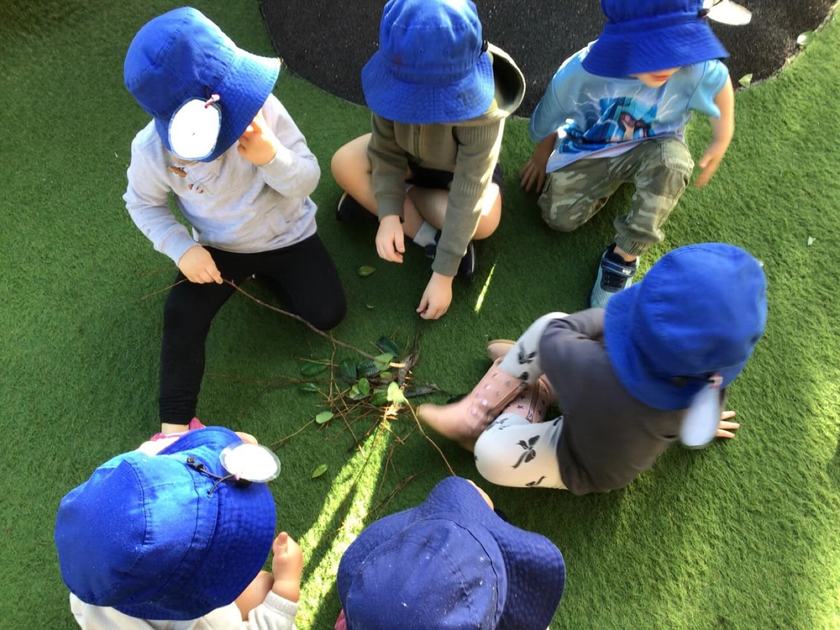
"Sustainability Focus" appears on almost every early learning website, and on its own it tells you very little. Your real question is narrower: on an ordinary Tuesday, what is your child doing out in that yard, and is any of it learning?
The answer differs from centre to centre, so this post stays close to what our educators have written about their own rooms and gardens.
Educators at one of our centres have described their approach as restorative and generative: working with the earth's systems so that the centre community becomes a change agent, through everyday practice rather than one activity a year.
In practice it looks smaller. Water the plants before morning tea. Keep the container instead of binning it. Notice the bug before you step on it. It sits under two of our CLEAR values, Respect people and nature and Long-term view, and under the EYLF expectation that children show respect for their environment.
The Senior Toddler and Pre-Kindy children at one of our centres have started their own seedling containers, planting beetroot, tomato and corn. They prepared the soil and put the seeds in themselves, in recyclable containers they had collected and washed out.
Seeds do not perform on demand, and that is most of the value. A seed gives a child a reason to come back tomorrow to check. Our educators noticed children gravitating towards the garden all that term.
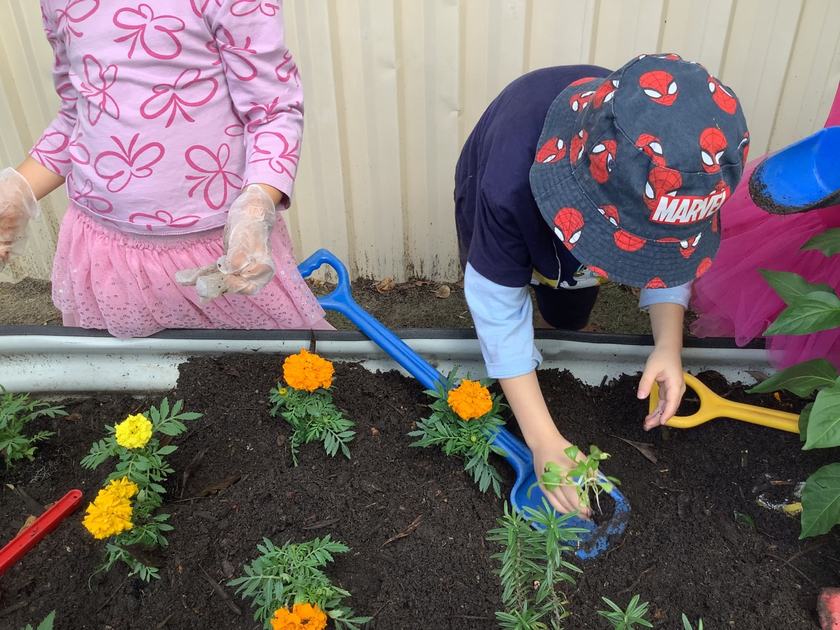
Gardens run on routine, and routine is where our educators see confidence build. The Global Sky Education centre team has described a morning rhythm: the plants watered, the chickens and ducks checked, the coop cleaned and fresh food and water put out. In the afternoon, the day's food scraps go out to the chickens.
It is a loop a three-year-old can follow all the way round, from lunchbox to chicken.
The same thread runs indoors. Toddlers at Taranganba have been making their own beds after rest time. Our educators link that less to tidiness than to perseverance, coordination and pride in contributing.
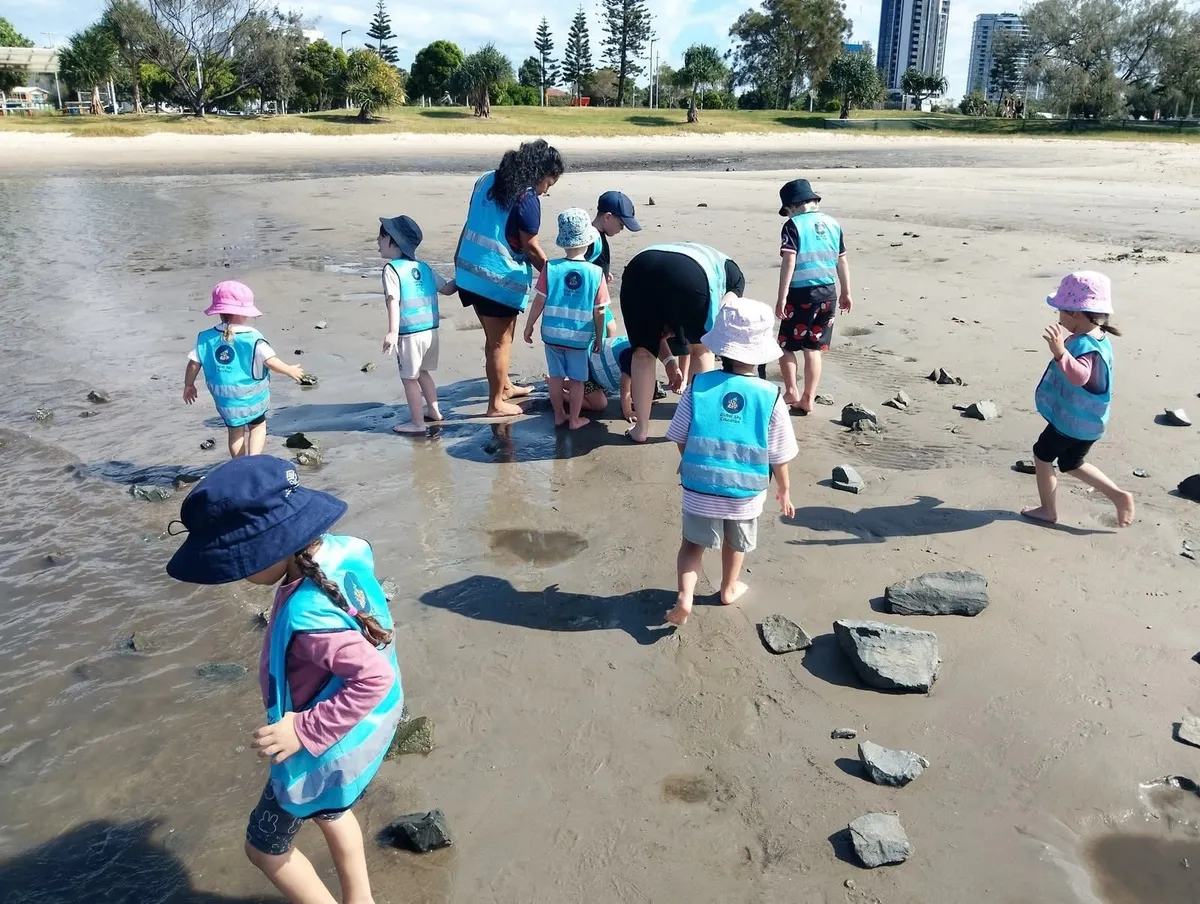
Taranganba children spent a week on bug investigations, after our educators put out magnifying glasses and bug catchers. At Morphett Vale, pre-kindy and kindy children watched a monarch butterfly through its chrysalis phase and emerge, then talked about which fruits and vegetables a butterfly might enjoy. Our educators described that as their Reggio Emilia approach at work.
Not all of it is science. Taranganba children have built a fairy garden and a nature small world from plants, wood, stones, bark and animal figures. Educators noticed storytelling, and care in the way children handled living things.
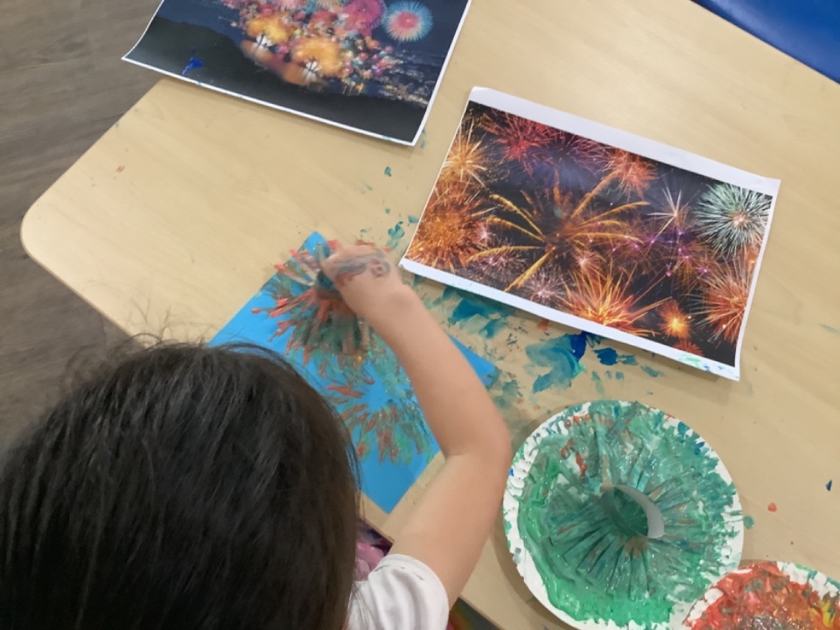
A Global Sky Education centre nursery group spent a whole day outdoors, painting on sheets pegged to the fence with brushes, hands and leaves from the garden, then eating lunches packed from home in the shade.
Sustainability comes back indoors as materials. Educators at one of our centres have written about upcycling and repurposing, and about how recycled and natural materials let children make, re-make, construct and pull apart again.
Pre-Kindy children at one of our centres collected natural treasures on an excursion, then combined them with cardboard, paper plates, flowers, leaves, sticks and beads. Boats and zoos came out of the same pile. One child turned a paper plate into a flower vase.
The cardboard is a teaching choice, not a saving. An open-ended material leaves a child more to decide.
At Taranganba, learning about the Traditional Custodians of the land is built into the program rather than saved for one week a year. Recent conversations centred on local birds: which ones the children see, their colours and shapes, and how they move.
During NAIDOC Week, a Global Sky Education centre team set up rooms with natural loose parts, storytelling invitations and Australian native animals, and shared Dreaming stories.
We are describing this plainly on purpose. We can tell you what the centres planned and what the children did, not what it achieved.
Our seven centres differ in size, climate and yard, so gardens and animals are not identical. The gardening above is what our educators at two of our centres have described, and yard-based nature play is a strong thread at Taranganba. If a garden matters to you, ask about the one at your centre.
All seven centres are rated Meeting the National Quality Standard under the NQF, and every program sits under the EYLF, with My Time, Our Place for school-age care.
If you would like to see it for yourself, book a tour and ask to be shown the garden. You can find your nearest centre, or go straight to a centre page such as Southport. If your child is already with us, ask their educator what they have planted this term.